สรรพคุณ / การใช้
อาการข้างเคียงที่พบ
ข้อมูลจากเอกสารกำกับยา ไม่ครบถ้วนทุกกรณี — โปรดปรึกษาเภสัชกรสำหรับรายละเอียดเต็ม
ส่วนประกอบ
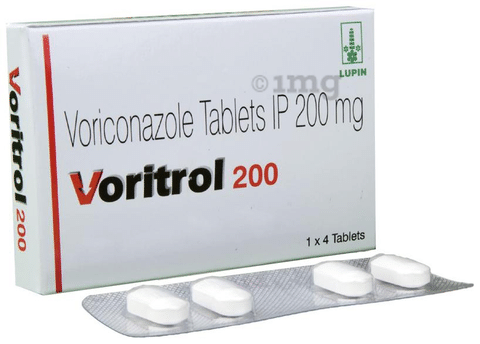
Voriconazole (200mg)
1
Voriconazole
200mg
ฐานความรู้
Wikipedia
Voriconazole
Voriconazole, sold under the brand name Vfend among others, is an antifungal medication used to treat a number of fungal infections. This includes aspergillosis, candidiasis, coccidioidomycosis, histoplasmosis, penicilliosis, and infections by Scedosporium or Fusarium. It can be taken by mouth or used by injection into a vein.
Voriconazole วางจำหน่ายภายใต้ชื่อการค้า Vfend และอื่น ๆ เป็นยาต้านเชื้อราที่ใช้รักษาโรคติดเชื้อราได้หลายชนิด รวมถึงแอสเปอร์จิลโลสิส แคนดิดิเอียซิส คอคซิดิออยด์ไมโคซิส ฮิสโตพลาสโมซิส เพนิซิลลิโอสิส และการติดเชื้อจาก Scedosporium หรือ Fusarium สามารถรับประทานหรือใช้โดยการฉีดเข้าหลอดเลือดดำ
Grokipedia
Voriconazole
Voriconazole (Vfend) is a synthetic triazole antifungal agent approved by the U.S. Food and Drug Administration in 2002 for the treatment of serious invasive fungal infections in adults and children aged 2 years and older.[1] It is indicated primarily for invasive aspergillosis, esophageal candidiasis, candidemia in non-neutropenic patients, and other deep tissue Candida infections, as well as serious infections caused by Scedosporium apiospermum and Fusarium species in patients who are intolerant of or refractory to other antifungal therapies.[2] As a second-generation azole, voriconazole exhibits broad-spectrum activity against a wide range of yeasts and molds, including Aspergillus species, Candida species, and various opportunistic pathogens, and remains first-line for invasive aspergillosis per 2025 guidelines.[1]
แหล่งข้อมูลจากหน้าเว็บ 3
W
Voriconazole (Vfend) - WebMD
webmd.com · อันดับ 1
Voriconazole is an azole antifungal, prescription only; brand name Vfend. Forms: tablets (50 mg and 200 mg), oral liquid 40 mg/mL (200 mg per 5 mL), intravenous…
M
Voriconazole: MedlinePlus Drug Information
medlineplus.gov · อันดับ 2
Voriconazole is an antifungal in the triazole class, sold as Vfend; works by slowing the growth of the fungi that cause infection. Approved for adults and child…
D
Voriconazole - DermNet
dermnetnz.org · อันดับ 3
Voriconazole is a triazole antifungal reserved mainly for serious fungal infections. It works by binding fungal p450 enzymes, halting production of ergosterol, …