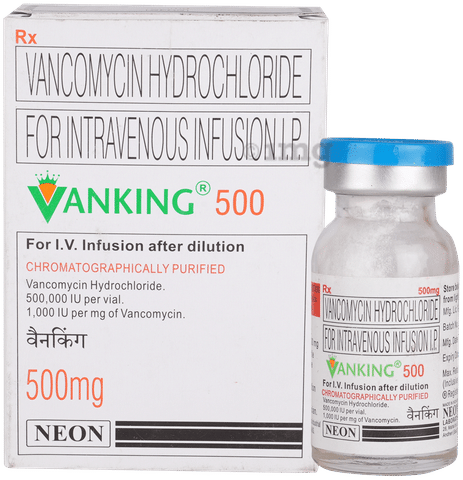
Vanking
Vanking 500mg Injection
🇮🇳จำหน่ายในอินเดีย
injection
ผู้ผลิตNeon Laboratories Ltd
แหล่งอ้างอิงเว็บ2 หน้า
สรรพคุณ / การใช้
อาการข้างเคียงที่พบ
ข้อมูลจากเอกสารกำกับยา ไม่ครบถ้วนทุกกรณี — โปรดปรึกษาเภสัชกรสำหรับรายละเอียดเต็ม
ส่วนประกอบ
Vancomycin (500mg)
1
Vancomycin
500mg
ฐานความรู้
Wikipedia
Vancomycin
Vancomycin is a glycopeptide antibiotic medication used to treat certain bacterial infections. It is administered intravenously to treat complicated skin infections, bloodstream infections, endocarditis, bone and joint infections, and meningitis caused by methicillin-resistant Staphylococcus aureus. Blood levels may be measured to determine the correct dose. Vancomycin is also taken orally to treat Clostridioides difficile infections. When taken orally, it is poorly absorbed.
Vancomycin เป็นยาปฏิชีวนะกลุ่มไกลโคเปปไทด์ ใช้รักษาการติดเชื้อแบคทีเรียบางชนิด โดยให้ทางหลอดเลือดดำเพื่อรักษาการติดเชื้อที่ผิวหนังแบบมีภาวะแทรกซ้อน การติดเชื้อในกระแสเลือด การอักเสบของเยื่อบุหัวใจ การติดเชื้อที่กระดูกและข้อ และการอักเสบของเยื่อหุ้มสมองที่เกิดจาก Staphylococcus aureus ที่ดื้อต่อ methicillin อาจตรวจวัดระดับยาในเลือดเพื่อกำหนดขนาดยาที่ถูกต้อง Vancomycin ยังใช้รับประทานเพื่อรักษาการติดเชื้อ Clostridioides difficile เมื่อรับประทาน ยาจะถูกดูดซึมได้ไม่ดี
Grokipedia
Vancomycin
Vancomycin is a tricyclic glycopeptide antibiotic derived from the soil bacterium Amycolatopsis orientalis (formerly Streptomyces orientalis), primarily used to treat severe infections caused by gram-positive bacteria, including methicillin-resistant Staphylococcus aureus (MRSA) and other multidrug-resistant strains.[1][2] Discovered in 1952 from soil samples collected in the jungles of Borneo, it was introduced clinically in the late 1950s as a last-resort option for infections resistant to earlier antibiotics like penicillin.[3]
แหล่งข้อมูลจากหน้าเว็บ 2
N
Vancomycin - StatPearls - NCBI Bookshelf
ncbi.nlm.nih.gov · อันดับ 1
Vancomycin (StatPearls, NCBI Bookshelf; last updated October 29, 2024). Composition: a tricyclic glycopeptide antibiotic originally derived from the organism St…
R
vancomycin (Rx) - Brands: Vancocin, Firvanq, Tyzavan - Medscape Reference
reference.medscape.com · อันดับ 2
vancomycin (Rx) - Brands: Vancocin, Firvanq, Tyzavan. Drug class: Glycopeptides. Manufacturer: not stated. Composition: vancomycin, a glycopeptide antibiotic av…