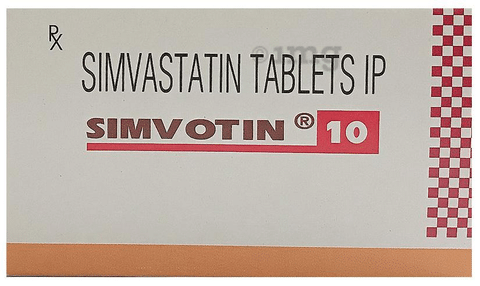
Simvotin 10
Simvotin 10 Tablet
🇮🇳จำหน่ายในอินเดีย
tablet
ผู้ผลิตSun Pharmaceutical Industries Ltd
แหล่งอ้างอิงเว็บ3 หน้า
สรรพคุณ / การใช้
อาการข้างเคียงที่พบ
ข้อมูลจากเอกสารกำกับยา ไม่ครบถ้วนทุกกรณี — โปรดปรึกษาเภสัชกรสำหรับรายละเอียดเต็ม
ส่วนประกอบ
Simvastatin (10mg)
1
Simvastatin
10mg
ฐานความรู้
Wikipedia
Simvastatin
Simvastatin, sold under the brand name Zocor among others, is a statin, a type of lipid-lowering medication. It is used along with exercise, diet, and weight loss to decrease elevated lipid levels. It is also used to decrease the risk of heart problems in those at high risk. It is taken by mouth.
Simvastatin วางจำหน่ายภายใต้ชื่อการค้า Zocor และชื่ออื่น ๆ เป็นยากลุ่มสแตติน (statin) ซึ่งเป็นยาลดระดับไขมันในเลือดชนิดหนึ่ง ใช้ร่วมกับการออกกำลังกาย การควบคุมอาหาร และการลดน้ำหนัก เพื่อลดระดับไขมันในเลือดที่สูงขึ้น นอกจากนี้ยังใช้เพื่อลดความเสี่ยงต่อปัญหาหัวใจในผู้ที่มีความเสี่ยงสูง ให้รับประทานทางปาก
Grokipedia
Simvastatin
Simvastatin is a lipid-lowering medication belonging to the statin class, derived synthetically from a fermentation product of the fungus Aspergillus terreus.[1] It functions as a prodrug that is metabolized in the liver to its active β-hydroxyacid form, which competitively inhibits 3-hydroxy-3-methylglutaryl-coenzyme A (HMG-CoA) reductase, the rate-limiting enzyme in cholesterol biosynthesis, thereby reducing hepatic cholesterol production and increasing low-density lipoprotein (LDL) receptor expression to enhance clearance of LDL cholesterol from the blood.[2] Approved by the U.S. Food and Drug Administration in 1991 under the brand name Zocor, simvastatin is indicated for use in combination with diet and exercise to treat hyperlipidemia, including primary hypercholesterolemia, mixed dyslipidemia, homozygous familial hypercholesterolemia, and to reduce the risk of cardiovascular events such as myocardial infarction, stroke, and cardiovascular mortality in patients with atherosclerotic cardiovascular disease or diabetes.[3][4][5]
แหล่งข้อมูลจากหน้าเว็บ 3
M
Simvastatin Tablets - Cleveland Clinic
my.clevelandclinic.org · อันดับ 1
SIMVASTATIN (SIM va sta tin) treats high cholesterol and reduces the risk of heart attack and stroke. It belongs to a group of medications called statins. Commo…
M
Simvastatin: MedlinePlus Drug Information
medlineplus.gov · อันดับ 2
Simvastatin belongs to a drug class called HMG-CoA reductase inhibitors (statins). It lowers cholesterol by slowing how much the body makes, which reduces build…
N
Simvastatin: a medicine to treat high cholesterol - NHS
nhs.uk · อันดับ 3
Simvastatin is a medicine used to treat high cholesterol and prevent heart attacks and strokes. It is prescription-only. Common brand name Zocor. Uses: brings c…