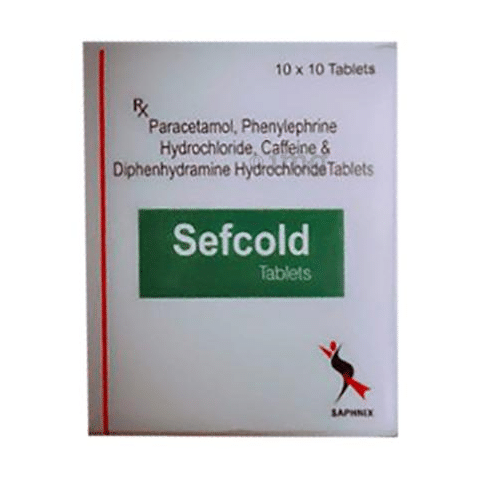
Sefcold
Sefcold Tablet
🇮🇳จำหน่ายในอินเดีย
tablet
สรรพคุณ / การใช้
อาการข้างเคียงที่พบ
ข้อมูลจากเอกสารกำกับยา ไม่ครบถ้วนทุกกรณี — โปรดปรึกษาเภสัชกรสำหรับรายละเอียดเต็ม
ส่วนประกอบ
Caffeine (30mg) + Diphenhydramine (25mg) + Paracetamol (500mg) + Phenylephrine (5mg)
1
Caffeine
30mg
2
Diphenhydramine
25mg
3
Paracetamol
500mg
4
Phenylephrine
5mg
ฐานความรู้
Wikipedia
Paracetamol
Paracetamol, or acetaminophen, is an analgesic and antipyretic agent used to treat fever and mild to moderate pain. It is a widely available over-the-counter drug sold generically or under various brand names, including Tylenol and Panadol.
Paracetamol หรือ acetaminophen เป็นยาระงับปวดและยาลดไข้ ใช้สำหรับรักษาอาการไข้และปวดเล็กน้อยถึงปานกลาง เป็นยาที่หาซื้อได้โดยทั่วไปตามร้านขายยา (over-the-counter) โดยจำหน่ายในรูปแบบยาสามัญหรือภายใต้ชื่อการค้าต่าง ๆ รวมถึง Tylenol และ Panadol
Grokipedia
Paracetamol
Paracetamol, also known as acetaminophen, is a synthetic non-opioid analgesic and antipyretic medication that exerts its effects primarily through central mechanisms, including activation of descending serotonergic pathways, to relieve mild to moderate pain and reduce fever.[1][2] First synthesized in 1878 by American chemist Harmon Northrop Morse from p-nitrophenol, it remained largely overlooked until the 1940s and 1950s, when studies demonstrated its superior safety over related aniline derivatives like phenacetin, leading to its commercialization as a preferred alternative for everyday use.[3][4] Widely recommended as a first-line treatment for pain by the World Health Organization due to its efficacy and low incidence of gastrointestinal side effects compared to non-steroidal anti-inflammatory drugs, paracetamol is available over-the-counter in many countries but carries a narrow margin of safety in overdose, where excessive dosing depletes hepatic glutathione and promotes formation of the toxic metabolite N-acetyl-p-benzoquinone imine (NAPQI), resulting in acute liver failure—the most common cause of drug-induced hepatotoxicity in nations like the United Kingdom and United States.[5][6][7] While therapeutic doses pose minimal risk of hepatotoxicity even in patients with chronic liver disease, intentional or accidental overdoses exceeding 150 mg/kg in adults necessitate prompt intervention with N-acetylcysteine to mitigate severe outcomes.[8][9]