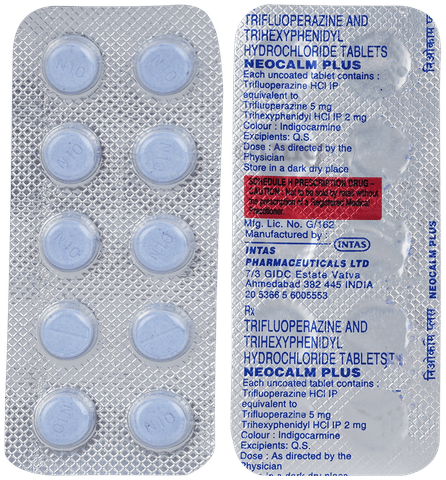
Neocalm Plus
Neocalm Plus Tablet
🇮🇳จำหน่ายในอินเดีย
tablet
ผู้ผลิตIntas Pharmaceuticals Ltd
แหล่งอ้างอิงเว็บ3 หน้า
สรรพคุณ / การใช้
อาการข้างเคียงที่พบ
ข้อมูลจากเอกสารกำกับยา ไม่ครบถ้วนทุกกรณี — โปรดปรึกษาเภสัชกรสำหรับรายละเอียดเต็ม
ส่วนประกอบ
Trifluoperazine (5mg) + Trihexyphenidyl (2mg)
1
Trifluoperazine
5mg
2
Trihexyphenidyl
2mg
ฐานความรู้
Wikipedia
Trihexyphenidyl
Trihexyphenidyl is an antispasmodic drug used to treat stiffness, tremors, spasms, and poor muscle control. It is an agent of the antimuscarinic class and is often used in management of Parkinson's disease. It was approved by the FDA for the treatment of Parkinson's in the US in 1949.
Trihexyphenidyl เป็นยาต้านอาการหดเกร็งของกล้ามเนื้อ (antispasmodic) ใช้สำหรับรักษาอาการกล้ามเนื้อฝืด อาการสั่น อาการกระตุก และการควบคุมกล้ามเนื้อที่บกพร่อง จัดเป็นยาในกลุ่ม antimuscarinic และมักใช้ในการรักษาโรคพาร์กินสัน (Parkinson's disease) ยานี้ได้รับการรับรองจาก FDA สำหรับการรักษาโรคพาร์กินสันในสหรัฐอเมริกาเมื่อปี ค.ศ. 1949
Grokipedia
Trihexyphenidyl
Trihexyphenidyl is a synthetic anticholinergic medication primarily used to manage symptoms of Parkinson's disease, including tremors, rigidity, and bradykinesia, as well as extrapyramidal side effects induced by antipsychotic drugs.[1] It functions by blocking muscarinic acetylcholine receptors in the central nervous system, thereby restoring the balance between cholinergic and dopaminergic activity disrupted in parkinsonian states.[2] Approved by the FDA in 1949, it is available in oral tablet and elixir forms and is often employed as an adjunct to levodopa therapy or as monotherapy in early-stage Parkinson's.[2][3]
แหล่งข้อมูลจากหน้าเว็บ 3
N
Trihexyphenidyl - StatPearls - NCBI Bookshelf
ncbi.nlm.nih.gov · อันดับ 1
Drug title & active ingredient: Trihexyphenidyl (also called benzhexol; active moiety trihexyphenidyl HCl), an anticholinergic agent. Uses/Indications: FDA-appr…
M
Trihexyphenidyl: MedlinePlus Drug Information
medlineplus.gov · อันดับ 2
Drug title: Trihexyphenidyl. Active ingredient/class: trihexyphenidyl, an antimuscarinic; works by relaxing muscles and the nerve impulses that control muscle f…
M
Trihexyphenidyl Tablets - Cleveland Clinic
my.clevelandclinic.org · อันดับ 3
Drug Title: Trihexyphenidyl Tablets. Active Ingredient: Trihexyphenidyl. Brand Name: Artane. Uses/Indications: treats movement disorders, including those caused…