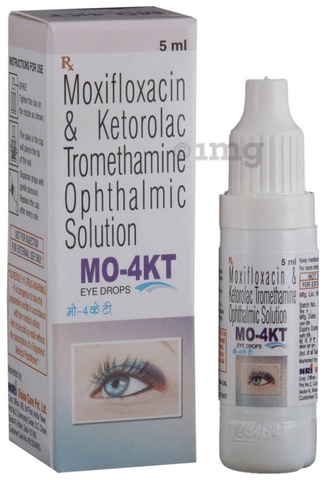
MO 4 KT
MO 4 KT Eye Drops
🇮🇳จำหน่ายในอินเดีย
eye drop
สรรพคุณ / การใช้
อาการข้างเคียงที่พบ
ข้อมูลจากเอกสารกำกับยา ไม่ครบถ้วนทุกกรณี — โปรดปรึกษาเภสัชกรสำหรับรายละเอียดเต็ม
ส่วนประกอบ
Ketorolac (0.5% w/v) + Moxifloxacin (0.5% w/v)
1
Ketorolac
0.5% w/v
2
Moxifloxacin
0.5% w/v
ฐานความรู้
Wikipedia
Moxifloxacin
Moxifloxacin, sold under the brand name Avelox among others, is an antibiotic, used to treat bacterial infections, including pneumonia, conjunctivitis, endocarditis, tuberculosis, and sinusitis. It can be given by mouth, by injection into a vein, and as an eye drop.
Moxifloxacin ซึ่งขายภายใต้ชื่อการค้า Avelox และชื่ออื่น ๆ เป็นยาปฏิชีวนะ ใช้สำหรับรักษาการติดเชื้อแบคทีเรีย รวมถึงโรคปอดอักเสบ เยื่อบุตาอักเสบ เยื่อบุหัวใจอักเสบ วัณโรค และไซนัสอักเสบ สามารถให้ยาได้ทั้งทางปาก โดยการฉีดเข้าหลอดเลือดดำ และในรูปแบบยาหยอดตา
Grokipedia
Moxifloxacin
Moxifloxacin is a synthetic fluoroquinolone antibiotic belonging to the fourth-generation class, characterized by its broad-spectrum activity against a wide range of Gram-positive, Gram-negative, and atypical bacteria.[1] It was first approved by the U.S. Food and Drug Administration in December 1999.[2] It is indicated for treating various bacterial infections, including community-acquired pneumonia, acute bacterial sinusitis, acute exacerbations of chronic bronchitis, complicated skin and skin structure infections, complicated intra-abdominal infections, and plague (both pneumonic and septicemic forms).[3] Moxifloxacin works by binding to and inhibiting bacterial enzymes DNA gyrase and topoisomerase IV, which are essential for DNA replication, transcription, repair, and recombination, thereby leading to bacterial cell death.[1]