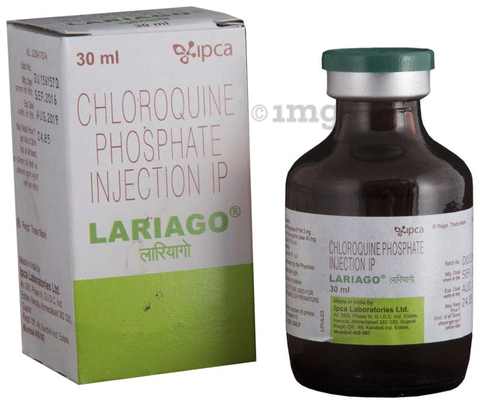
Lariago
Lariago 40mg Injection
🇮🇳จำหน่ายในอินเดีย
injection
ผู้ผลิตIpca Laboratories Ltd
แหล่งอ้างอิงเว็บ5 หน้า
สรรพคุณ / การใช้
อาการข้างเคียงที่พบ
ข้อมูลจากเอกสารกำกับยา ไม่ครบถ้วนทุกกรณี — โปรดปรึกษาเภสัชกรสำหรับรายละเอียดเต็ม
ส่วนประกอบ
Chloroquine (40mg)
1
Chloroquine
40mg
ฐานความรู้
Wikipedia
Chloroquine
Chloroquine is an antiparasitic medication that treats malaria. It works by increasing the levels of heme in the blood, a substance toxic to the malarial parasite. This kills the parasite and stops the infection from spreading. Certain types of malaria, resistant strains, and complicated cases typically require different or additional medication. Chloroquine is also occasionally used for amebiasis that is occurring outside the intestines, rheumatoid arthritis, and lupus erythematosus. While it has not been formally studied in pregnancy, it appears safe. It is taken by mouth. It was studied to treat COVID-19 early in the pandemic, but these studies were largely halted in mid-2020, and the NIH does not recommend its use for this purpose.
Chloroquine เป็นยาต้านปรสิตที่ใช้รักษามาลาเรีย ออกฤทธิ์โดยการเพิ่มระดับ heme ในเลือด ซึ่งเป็นสารที่มีพิษต่อเชื้อปรสิตมาลาเรีย ทำให้เชื้อปรสิตตายและหยุดการแพร่กระจายของการติดเชื้อ มาลาเรียบางชนิด เชื้อสายพันธุ์ที่ดื้อยา และผู้ป่วยที่มีภาวะแทรกซ้อน โดยทั่วไปจำเป็นต้องใช้ยาที่แตกต่างออกไปหรือยาเพิ่มเติม Chloroquine ยังใช้เป็นครั้งคราวสำหรับอะมีเบียสิส (amebiasis) ที่เกิดนอกลำไส้ โรคข้ออักเสบรูมาตอยด์ และโรค lupus erythematosus แม้ว่าจะไม่ได้รับการศึกษาอย่างเป็นทางการในสตรีมีครรภ์ แต่ดูเหมือนว่าจะปลอดภัย ใช้โดยการรับประทาน เคยมีการศึกษาเพื่อรักษา COVID-19 ในช่วงต้นของการระบาด แต่การศึกษาเหล่านี้ถูกยุติไปส่วนใหญ่ในช่วงกลางปี 2020 และ NIH ไม่แนะนำให้ใช้ยานี้เพื่อวัตถุประสงค์ดังกล่าว
Grokipedia
Chloroquine
Chloroquine is a synthetic 4-aminoquinoline compound developed in 1934 by Hans Andersag at Bayer laboratories in Germany, initially synthesized as Resochin for potential antimalarial activity but shelved due to perceived toxicity concerns.[1] It functions primarily by accumulating in the parasite's food vacuole, where it inhibits heme polymerization, leading to toxic heme accumulation that disrupts Plasmodium digestion of hemoglobin during the erythrocytic stage of malaria.[2] Historically introduced during World War II as a quinine substitute, chloroquine became the cornerstone of malaria treatment and prophylaxis globally due to its efficacy, low cost, and oral bioavailability, though its dominance eroded with the rapid spread of resistance in Plasmodium falciparum across Africa, Asia, and beyond starting in the late 1950s.[3] Beyond malaria, it is employed in managing autoimmune conditions such as rheumatoid arthritis and systemic lupus erythematosus by modulating lysosomal function, autophagy inhibition, and immune signaling pathways, albeit with cumulative risks including irreversible retinopathy from retinal pigment epithelium damage after prolonged use exceeding 5 mg/kg/day.[4][5] Its investigation for COVID-19 prophylaxis and therapy, prompted by in vitro antiviral effects, yielded no mortality benefit and potential harm in randomized trials and meta-analyses, underscoring inefficacy against SARS-CoV-2 despite early observational endorsements.[6][7]
Chloroquine เป็นสารประกอบสังเคราะห์กลุ่ม 4-aminoquinoline ที่พัฒนาขึ้นในปี ค.ศ. 1934 โดย Hans Andersag ที่ห้องปฏิบัติการ Bayer ในประเทศเยอรมนี แรกเริ่มถูกสังเคราะห์ขึ้นในชื่อ Resochin เพื่อศึกษาศักยภาพด้านฤทธิ์ต้านมาลาเรีย แต่ถูกพักไว้เนื่องจากมีข้อกังวลด้านความเป็นพิษ[1] ยาออกฤทธิ์เป็นหลักโดยการสะสมตัวใน food vacuole ของปรสิต ซึ่งยับยั้งการเกิด polymerization ของ heme ส่งผลให้เกิดการสะสม heme ในระดับเป็นพิษ รบกวนการย่อย hemoglobin ของ Plasmodium ในระยะ erythrocytic stage ของมาลาเรีย[2] ในทางประวัติศาสตร์ ยาได้รับการนำมาใช้ในช่วงสงครามโลกครั้งที่สองในฐานะสารทดแทน quinine และกลายเป็นหลักสำคัญของการรักษาและป้องกันมาลาเรียทั่วโลก เนื่องจากประสิทธิภาพ ราคาต่ำ และ bioavailability เมื่อรับประทาน อย่างไรก็ตาม ความโดดเด่นของยาได้ลดลงจากการแพร่กระจายอย่างรวดเร็วของเชื้อ Plasmodium falciparum ที่ดื้อต่อยา ทั่วทวีปแอฟริกา เอเชีย และภูมิภาคอื่น ๆ ตั้งแต่ปลายทศวรรษ 1950[3] นอกเหนือจากมาลาเรีย ยายังใช้ในการดูแลโรค autoimmune เช่น โรคข้ออักเสบรูมาตอยด์ (rheumatoid arthritis) และ systemic lupus erythematosus โดยการปรับการทำงานของ lysosome การยับยั้ง autophagy และวิถีส่งสัญญาณของระบบภูมิคุ้มกัน แต่มีความเสี่ยงสะสม รวมถึง retinopathy ที่ไม่สามารถกลับคืนสภาพเดิมได้จากความเสียหายของ retinal pigment epithelium หลังการใช้ยาต่อเนื่องในขนาดเกิน 5 mg/kg/day[4][5] การศึกษายาสำหรับการป้องกันและรักษา COVID-19 ซึ่งเกิดจากฤทธิ์ต้านไวรัส in vitro พบว่าไม่มีประโยชน์ในการลดอัตราการเสียชีวิต และอาจก่ออันตรายได้ ตามผลจาก randomized trials และ meta-analyses ซึ่งยืนยันถึงความไร้ประสิทธิภาพต่อ SARS-CoV-2 แม้จะมีการรับรองในช่วงแรกจากการศึกษาเชิงสังเกต[6][7]
แหล่งข้อมูลจากหน้าเว็บ 5
M
Chloroquine (oral route) - Side effects & dosage - Mayo Clinic
mayoclinic.org · อันดับ 1
Skip to content Care at Mayo Clinic Health Library For Medical Professionals Research & Education at Mayo Clinic Giving to Mayo Clinic Request appointment Regis…
P
Chloroquine | C18H26ClN3 | CID 2719 - PubChem
pubchem.ncbi.nlm.nih.gov · อันดับ 2
An official website of the United States government Here is how you know NIH National Library of Medicine NCBI R PubChem About Docs Submit Contact Theme Setting…
M
Chloroquine: MedlinePlus Drug Information
medlineplus.gov · อันดับ 3
Skip navigation An official website of the United States government Here’s how you know National Library of Medicine Search MedlinePlus GO About MedlinePlusWhat…
B
Chloroquine | Description, Uses, & Side Effects | Britannica
britannica.com · อันดับ 4
Search Britannica Click here to search SUBSCRIBE Login Ask the ChatbotGames & QuizzesHistory & SocietyScience & TechBiographiesAnimals & NatureGeography & Trave…
M
Chloroquine (Aralen): Uses & Side Effects
my.clevelandclinic.org · อันดับ 5
Locations: Abu Dhabi|Canada|Florida|London|Nevada|Ohio 800.223.2273|MyChart|Medical Professionals|Careers|Donate Now Find a Provider Locations and Directions Se…