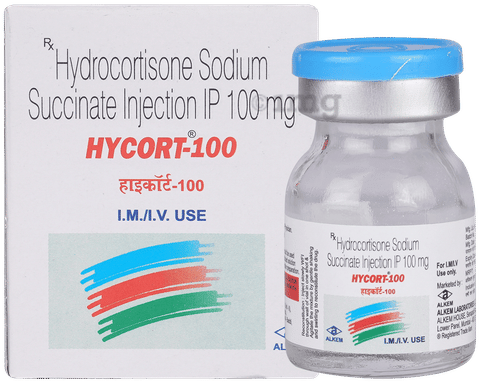
Hycort
Hycort 100mg Injection
🇮🇳จำหน่ายในอินเดีย
injection
ผู้ผลิตAlkem Laboratories Ltd
แหล่งอ้างอิงเว็บ5 หน้า
สรรพคุณ / การใช้
อาการข้างเคียงที่พบ
ข้อมูลจากเอกสารกำกับยา ไม่ครบถ้วนทุกกรณี — โปรดปรึกษาเภสัชกรสำหรับรายละเอียดเต็ม
ส่วนประกอบ
Hydrocortisone (100mg)
1
Hydrocortisone
100mg
ฐานความรู้
Wikipedia
Hydrocortisone
Hydrocortisone is the name for the hormone cortisol when supplied as a medication. It is a corticosteroid and works as an anti-inflammatory and by immune suppression. Uses include conditions such as adrenocortical insufficiency, adrenogenital syndrome, high blood calcium, thyroiditis, rheumatoid arthritis, dermatitis, asthma, and COPD. It is the treatment of choice for adrenocortical insufficiency. It can be given by mouth, topically, rectally or by injection. Stopping treatment after long-term use should be done slowly.
Hydrocortisone เป็นชื่อของฮอร์โมน cortisol เมื่อจัดทำเป็นยา เป็นยากลุ่ม corticosteroid ซึ่งออกฤทธิ์ต้านการอักเสบและกดภูมิคุ้มกัน ใช้รักษาภาวะต่าง ๆ เช่น ภาวะเปลือกต่อมหมวกไตทำงานไม่เพียงพอ กลุ่มอาการ adrenogenital syndrome ภาวะแคลเซียมในเลือดสูง ต่อมไทรอยด์อักเสบ โรคข้ออักเสบรูมาตอยด์ ผิวหนังอักเสบ โรคหืด และโรคปอดอุดกั้นเรื้อรัง (COPD) เป็นยาที่เลือกใช้เป็นอันดับแรกสำหรับการรักษาภาวะเปลือกต่อมหมวกไตทำงานไม่เพียงพอ สามารถให้ยาได้โดยการรับประทาน ทาภายนอก ทางทวารหนัก หรือโดยการฉีด การหยุดการรักษาหลังจากใช้ยาต่อเนื่องเป็นระยะเวลานาน ควรทำอย่างช้า ๆ
Grokipedia
Hydrocortisone
Hydrocortisone, also known as cortisol, systematically named 11β,17α,21-trihydroxypregn-4-ene-3,20-dione, is a glucocorticoid steroid hormone with the molecular formula C₂₁H₃₀O₅, primarily secreted by the zona fasciculata of the adrenal cortex in response to adrenocorticotropic hormone (ACTH) stimulation.[1][2] It exerts its effects by binding to intracellular glucocorticoid receptors, translocating to the nucleus, and modulating gene transcription to influence carbohydrate metabolism, suppress inflammation, and regulate immune function.[3] In pharmacology, hydrocortisone serves as a replacement therapy for adrenal insufficiency, such as in Addison's disease, where endogenous production is deficient, and as an anti-inflammatory agent for conditions including allergic reactions, arthritis, and dermatoses.[4][5] Isolated and characterized as Compound F by Edward C. Kendall in the 1930s amid efforts to elucidate adrenal hormones, hydrocortisone's therapeutic potential paralleled the dramatic remissions observed in rheumatoid arthritis patients treated with related corticosteroids, contributing to Kendall's shared 1950 Nobel Prize in Physiology or Medicine with Philip S. Hench and Tadeusz Reichstein.[6] Despite its efficacy, chronic use carries risks of adverse effects including hyperglycemia, osteoporosis, and immunosuppression due to disruption of physiological feedback loops.[7]
แหล่งข้อมูลจากหน้าเว็บ 5
M
Hydrocortisone (oral route) - Side effects & dosage - Mayo Clinic
mayoclinic.org · อันดับ 1
Skip to content Care at Mayo Clinic Health Library For Medical Professionals Research & Education at Mayo Clinic Giving to Mayo Clinic Request appointment Regis…
M
Hydrocortisone: MedlinePlus Drug Information
medlineplus.gov · อันดับ 2
Skip navigation An official website of the United States government Here’s how you know National Library of Medicine Search MedlinePlus GO About MedlinePlusWhat…
N
Hydrocortisone: a steroid used to treat many health conditions - NHS
nhs.uk · อันดับ 3
Cookies on the NHS website We use some cookies to make this website work. Help improve online NHS services by also accepting analytics cookies. Your choice will…
R
Hydrocortisone: Side Effects, Uses, Dosage, Interactions, Warnings
rxlist.com · อันดับ 4
Drugs & Vitamins Drugs A-Z Generic Drugs A-Z Drugs by Classification Drugs Comparison (Drug Vs. Drug) Drugs and Conditions Vitamins & Supplements Drug Interacti…
M
Hydrocortisone Topical: MedlinePlus Drug Information
medlineplus.gov · อันดับ 5
Skip navigation An official website of the United States government Here’s how you know National Library of Medicine Search MedlinePlus GO About MedlinePlusWhat…