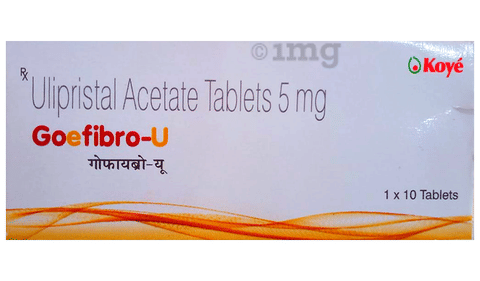
Goefibro-U
Goefibro-U Tablet
🇮🇳จำหน่ายในอินเดีย
tablet
ผู้ผลิตKoye Pharmaceuticals Pvt ltd
แหล่งอ้างอิงเว็บ2 หน้า
สรรพคุณ / การใช้
อาการข้างเคียงที่พบ
ข้อมูลจากเอกสารกำกับยา ไม่ครบถ้วนทุกกรณี — โปรดปรึกษาเภสัชกรสำหรับรายละเอียดเต็ม
ส่วนประกอบ
Ulipristal acetate (5mg)
1
Ulipristal acetate
5mg
ฐานความรู้
Wikipedia
Ulipristal acetate
Ulipristal acetate, sold under the brand name Ella among others, is a medication used for emergency contraception and uterine fibroids. As emergency contraception it should be used within 120 hours of vaginally penetrating intercourse. For fibroids it may be taken for up to six months. It is taken by mouth.
Ulipristal acetate จำหน่ายภายใต้ชื่อการค้า Ella และชื่ออื่น ๆ เป็นยาที่ใช้สำหรับคุมกำเนิดฉุกเฉินและเนื้องอกมดลูก สำหรับการคุมกำเนิดฉุกเฉิน ควรใช้ภายใน 120 ชั่วโมงหลังมีเพศสัมพันธ์ทางช่องคลอด สำหรับเนื้องอกมดลูก อาจรับประทานได้นานถึง 6 เดือน รับประทานทางปาก
Grokipedia
Ulipristal acetate
Ulipristal acetate is a synthetic selective progesterone receptor modulator (SPRM) that acts as a progesterone agonist/antagonist, primarily indicated for emergency contraception to prevent pregnancy after unprotected intercourse or contraceptive failure and for the management of moderate to severe symptoms associated with uterine fibroids in premenopausal women.[1][2] Approved in various formulations—such as 30 mg for emergency use (e.g., ella)—it inhibits or delays ovulation even when administered shortly before the luteinizing hormone surge, demonstrating superior efficacy to levonorgestrel in some clinical scenarios, particularly beyond 72 hours post-intercourse.[3][4] For uterine fibroids (e.g., 5 mg as Esmya or Fibristal), it reduces bleeding and fibroid volume, achieving amenorrhea in over 90% of patients across treatment courses in phase III trials, though its long-term use has been curtailed due to rare but serious hepatotoxicity risks.[5][6] Regulatory agencies, including the EMA, have imposed restrictions and suspensions on fibroid indications following post-marketing reports of liver injury, including failures necessitating transplantation, prompting mandatory liver function monitoring and contraindications for those with hepatic impairment.[7][8] While the 30 mg emergency contraceptive dose shows no elevated liver risks in population studies, the fibroid treatment's benefit-risk profile remains debated, with some analyses questioning the causality of isolated hep
แหล่งข้อมูลจากหน้าเว็บ 2
M
Ulipristal: MedlinePlus Drug Information
medlineplus.gov · อันดับ 1
Ulipristal — MedlinePlus Drug Information Drug title & pronunciation: Ulipristal, pronounced "ue' li pris tal." Sole brand name listed: Ella. Last revised 08/15…
P
Ulipristal Acetate (ella): A Selective Progesterone Receptor Modulator for Emergency Contraception
pmc.ncbi.nlm.nih.gov · อันดับ 2
Ulipristal Acetate (ella): A Selective Progesterone Receptor Modulator for Emergency Contraception — PMC review article Composition/Active Ingredient: The activ…