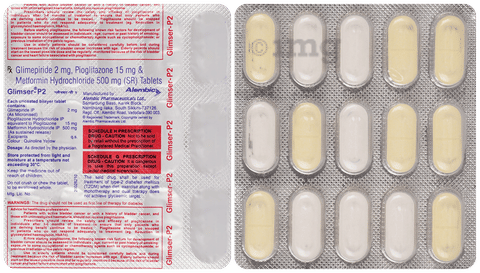
Glimser-P 2 SR
Glimser-P 2 Tablet SR
🇮🇳จำหน่ายในอินเดีย
tablet
สรรพคุณ / การใช้
อาการข้างเคียงที่พบ
ข้อมูลจากเอกสารกำกับยา ไม่ครบถ้วนทุกกรณี — โปรดปรึกษาเภสัชกรสำหรับรายละเอียดเต็ม
ส่วนประกอบ
Glimepiride (2mg) + Metformin (500mg) + Pioglitazone (15mg)
1
Glimepiride
2mg
2
Metformin
500mg
3
Pioglitazone
15mg
ฐานความรู้
Wikipedia
Metformin
Metformin, sold under the brand name Glucophage, among others, is the main first-line medication for the treatment of type 2 diabetes, particularly in people who are overweight. It is also used in the treatment of polyendocrine metabolic ovarian syndrome, and is sometimes used as an off-label adjunct to lessen the risk of metabolic syndrome in people who take antipsychotic medication. It has been shown to inhibit inflammation, and is not associated with weight gain. Metformin is taken by mouth.
Metformin ซึ่งจำหน่ายภายใต้ชื่อการค้า Glucophage และชื่อการค้าอื่น ๆ เป็นยาหลักที่ใช้เป็นอันดับแรก (first-line) ในการรักษาโรคเบาหวานชนิดที่ 2 โดยเฉพาะในผู้ที่มีน้ำหนักเกิน นอกจากนี้ยังใช้ในการรักษากลุ่มอาการรังไข่ที่มีความผิดปกติของต่อมไร้ท่อและการเผาผลาญ และบางครั้งใช้เป็นยาเสริมนอกเหนือข้อบ่งชี้ (off-label) เพื่อลดความเสี่ยงต่อการเกิดกลุ่มอาการเผาผลาญ (metabolic syndrome) ในผู้ที่ได้รับยาคลายอาการประสาทหลอน มีรายงานว่ายานี้ยับยั้งการอักเสบ และไม่สัมพันธ์กับการเพิ่มขึ้นของน้ำหนักตัว Metformin ใช้โดยการรับประทาน
Grokipedia
Metformin
Metformin is an oral biguanide antidiabetic medication that serves as a first-line therapy for managing type 2 diabetes mellitus by lowering blood glucose levels through multiple mechanisms, including reduced hepatic gluconeogenesis, decreased intestinal glucose absorption, enhanced insulin sensitivity in peripheral tissues, and modulation of the gut microbiota.[1][2][3] Approved by the U.S. Food and Drug Administration in 1994, it is one of the most widely prescribed drugs globally due to its efficacy, low cost, safety profile, and additional benefits such as modest weight loss—typically 2–3% of body weight (approximately 2–6 kg in the first year) for many patients with type 2 diabetes—or weight neutrality, and cardiovascular protection in diabetic patients. The weight loss is mediated by mechanisms such as increased production of the anti-hunger molecule lac-phe, elevated circulating levels of growth differentiation factor 15 (GDF15) leading to appetite suppression, effects via the central nervous system and gut hormones (e.g., GLP-1, PYY), gut microbiome changes, and reduced caloric intake. It is not FDA-approved specifically for weight loss, although it is sometimes used off-label, and the effect is generally modest and varies by individual adherence and condition.[1][4][5][6][7]